
VISIT OUR LOCATIONS:
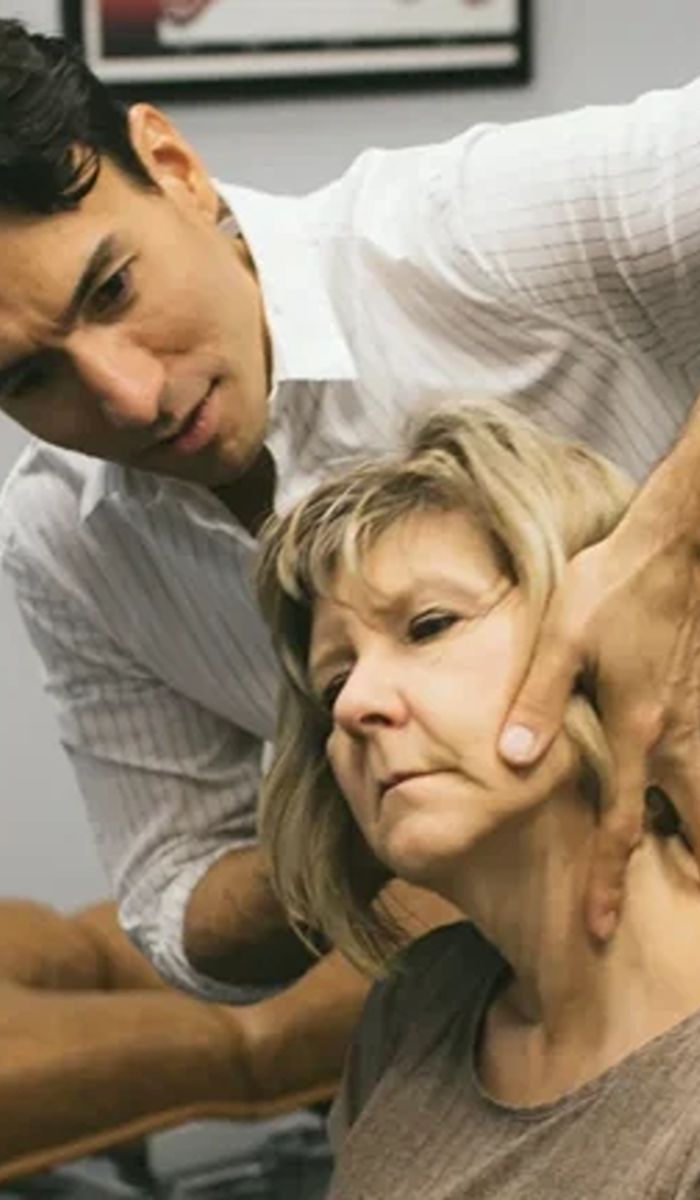
The temporomandibular joints sit just in front of the ears and connect the lower jaw to the skull. A cartilage disc within each joint supports smooth movement as you speak, chew, swallow, and yawn. “TMJ” refers to the joint, while temporomandibular disorders, or TMDs, describe a broader group of conditions affecting the joints, chewing muscles, and nearby tissues.
Symptoms may include soreness near the ear, facial tension, headaches, stiffness, clicking, or difficulty opening the mouth. Some people feel discomfort only while chewing. Others wake with a tired jaw or notice symptoms extending into the temple, neck, or upper shoulder.
Possible causes our TMJ chiropractor in Sarasota, FL, will look for include clenching, grinding, joint irritation, disc displacement, trauma, arthritis, muscular overload, or changes in upper cervical spine movement. Dental problems and ear conditions may produce similar pain.
Vertical Chiropractic® looks at jaw motion, muscle function, joint mechanics, posture, and relevant neck findings before care is discussed.
EVERY BITE, YAWN, AND CONVERSATION USES THESE JOINTS
Jaw symptoms may remain close to the joint or spread across the cheek, temple, ear, head, and neck. The pattern often changes with chewing, stress, sleep, or prolonged mouth opening.
Some people notice that, with this type of condition, their teeth meet differently or one side moves before the other. Clicking without pain doesn’t always indicate a disorder, but painful clicking, restricted motion, or recurring locking warrants closer evaluation.
THE SOURCE MAY BE THE JOINT, MUSCLES, OR NEARBY REGIONS
Our Sarasota TMJ chiropractors understand that discomfort rarely has a single cause. Joint mechanics, muscle tension, daily habits, past injuries, dental factors, and related neck movements may all contribute to symptoms.
Stress may increase clenching and muscle tension, but that does not mean jaw pain is simply emotional. A focused examination distinguishes muscular tenderness from joint restriction, nerve-related symptoms, and concerns better evaluated by a dentist or medical provider.
Jaw pain is a broad symptom, not a single diagnosis. These three conditions could support dedicated child pages because each involves different tissues, symptoms, and care considerations.
Repeated grinding or clenching places sustained pressure on the chewing muscles, teeth, and jaw joints, often producing morning soreness or headaches.
The cartilage disc may shift from its usual position, contributing to painful clicking, catching, locking, or restricted jaw movement.
Overloaded chewing muscles may develop tenderness and referred pain that spreads into the cheek, temple, ear region, head, or neck.
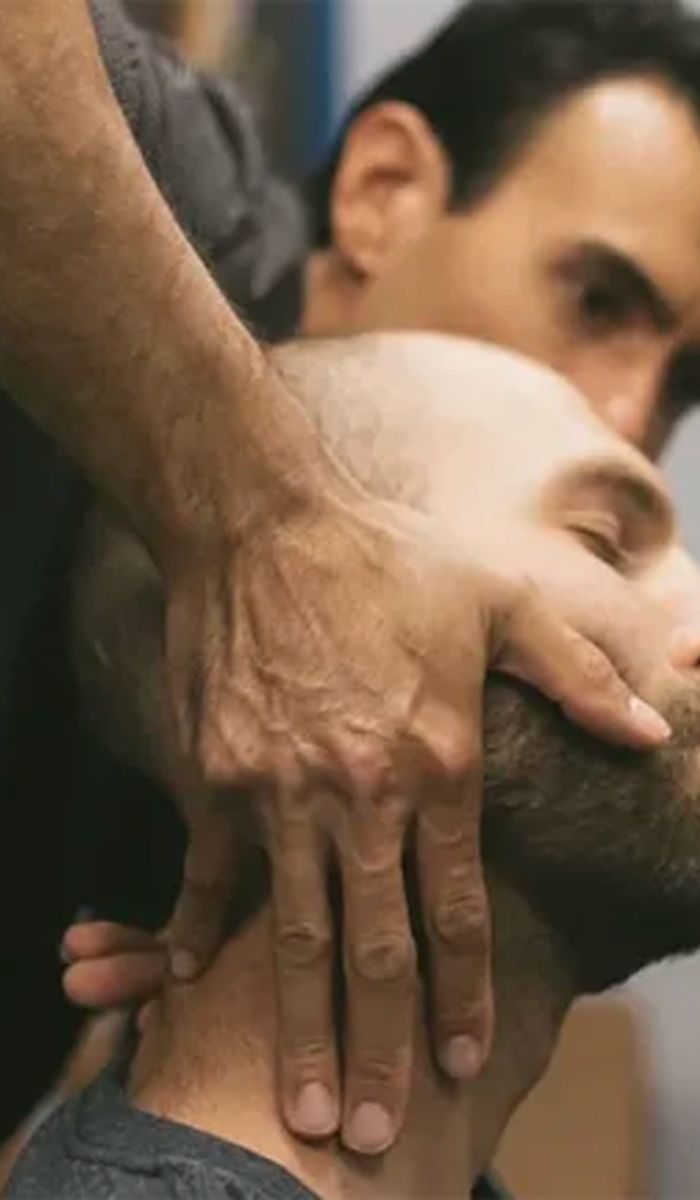
Our chiropractors for TMJ and jaw pain in Sarasota, Florida, evaluate the jaw in relation to the upper neck, posture, and muscles involved in chewing. Care may be appropriate when exam findings show restricted joint motion, muscle imbalance, or related cervical mechanics.
When clinically supported, a specific jaw or cervical adjustment may be considered. Activity changes and gentle mobility exercises may also form part of care. Disc injuries, dental disease, fractures, infections, and advanced arthritis may require another provider.
Your evaluation begins with symptom timing, clenching habits, previous injuries, dental history, headaches, and movements that increase discomfort. Our doctors may observe how far the mouth opens, the direction of jaw movement, joint sounds, muscle tenderness, and side-to-side motion.
The neck, posture, and relevant neurological findings may also be examined. These areas share muscular and neurological relationships with the jaw, but their involvement differs from person to person.
Imaging, dental evaluation, or referral may come first after significant trauma, suspected dislocation, major swelling, fever, tooth-related pain, or persistent locking. Sudden jaw pain accompanied by chest pressure, breathing difficulty, sweating, or nausea requires emergency medical attention.

Your first appointment explores when symptoms began, what movements provoke them, and any history of clenching, dental work, injury, or jaw locking. Our chiropractors then examine jaw motion, muscle tenderness, posture, and relevant cervical findings.
Afterward, we explain what stood out and discuss appropriate next steps. A jaw or cervical adjustment is considered only when supported by the examination. Dental care, imaging, or evaluation from another provider may take priority when the findings suggest tooth disease, significant disc involvement, fracture, infection, or another concern outside chiropractic scope.

Gonstead analysis provides a structured way to evaluate cervical findings that may influence posture, muscle tension, and jaw movement. Depending on your presentation, our chiropractors may use visualization, static palpation, motion palpation, instrumentation, neurological checks, or relevant imaging.
We also assess your jaw separately. Its movement, tracking, joint position, and relationship with the upper neck are considered before an adjustment is discussed. When care is appropriate, the contact point and direction reflect the findings from your examination. No two patients automatically receive the same jaw or cervical adjustment.
The temporomandibular joint requires careful examination because muscular, joint, dental, and cervical problems often create similar symptoms. Vertical Chiropractic® combines Gonstead training with extremity experience to clearly evaluate these relationships.
Chiropractic care may be appropriate when restricted jaw motion, altered joint mechanics, muscle tension, or related cervical findings contribute to symptoms. An examination is required because “TMJ” includes many possible problems rather than one diagnosis. Adjustments do not repair fractures, restore damaged teeth, or resolve every displaced disc. The findings establish where chiropractic care may fit and when a dentist, oral specialist, or medical provider should take the lead.
TMJ stands for temporomandibular joint, the joint connecting the lower jaw to the skull on each side. TMD stands for temporomandibular disorder and refers to conditions affecting the joint, chewing muscles, disc, or supporting tissues. People commonly use “TMJ” to describe symptoms or a diagnosis, but TMD is the more accurate term for the disorder itself.
Clicking may occur when the cartilage disc shifts as the jaw opens and closes. Joint movement may also become uneven after injury, muscular imbalance, or prolonged clenching. A painless click without restricted motion does not always require care. Painful clicking, recurrent locking, a change in how the teeth meet, or difficulty opening the mouth deserves evaluation to identify the structures involved.
Nighttime grinding or clenching may overload the jaw muscles and place added pressure on the joints. Common signs include morning soreness, temple headaches, tooth sensitivity, or a tired feeling while chewing breakfast. A dentist should evaluate tooth wear and discuss the possible need for an oral appliance. Chiropractic care may focus on related joint motion, muscle tension, posture, and cervical findings rather than replacing dental care.
The jaw and upper neck have close muscular, postural, and neurological relationships. Restricted cervical movement or prolonged forward-head positioning may contribute to tension around the jaw in some cases. That does not mean every TMJ complaint originates in the neck. Examining jaw motion and cervical mechanics together provides a more complete picture, especially when jaw symptoms occur alongside neck stiffness or headaches.
Firm, chewy, or oversized foods may increase discomfort during an active flare. Smaller bites and temporarily choosing softer foods may reduce mechanical demand. Gum chewing, nail biting, and repeatedly testing the jaw’s range may also keep the area irritated. Long-term dietary restriction should not replace an evaluation, particularly when limited opening, locking, dental pain, or unexplained weight loss is present.
Tooth pain, gum swelling, drainage, facial swelling, fever, or sensitivity to temperature may point toward a dental problem. Significant trauma, a jaw stuck open or closed, visible deformity, or sudden loss of movement requires prompt medical care. New jaw pain during chewing accompanied by a new headache or vision changes also deserves urgent evaluation. These findings should be investigated before adjustment-based care begins.
Recurring jaw pain, restricted opening, painful clicking, or tension that spreads into the head and neck deserves a careful evaluation. Vertical Chiropractic® examines jaw mechanics alongside related muscular and cervical findings before discussing individualized care.
Recurring jaw pain, restricted opening, painful clicking, or tension that spreads into the head and neck deserves a careful evaluation. Vertical Chiropractic® examines jaw mechanics alongside related muscular and cervical findings before discussing individualized care.
Call Vertical Chiropractic® in Sarasota at 941-413-5099 or schedule your visit online to have your TMJ and jaw pain properly evaluated.