
VISIT OUR LOCATIONS:

Tinnitus is the perception of sound without an external source. It may resemble ringing, buzzing, humming, hissing, clicking, or pulsing in one or both ears. Some people hear it occasionally. For others, it becomes persistent enough to affect sleep, concentration, work, or conversation.
The sound may involve changes within the auditory system, including the inner ear, auditory nerve, and brain pathways that process sound. Hearing loss and noise exposure are common contributors, but earwax, medication effects, head injuries, circulatory problems, jaw dysfunction, and other medical conditions may also be involved.
Vertical Chiropractic® evaluates neck motion, posture, jaw mechanics, and related neurological findings when a musculoskeletal contribution appears possible. A chiropractor for tinnitus should never assume that ringing begins in the spine.
Because the causes vary, hearing and medical evaluation may need to come before chiropractic care. The pattern of the sound offers a useful starting point.
THE SOUND MAY CHANGE IN VOLUME, PITCH, OR RHYTHM
Tinnitus may remain in the background or become hard to ignore in a quiet room. Its character and timing provide useful information during an evaluation.
Tinnitus may occur with hearing loss, ear pressure, dizziness, headaches, neck discomfort, or jaw tension. These accompanying symptoms do not confirm the cause, but they may indicate which type of provider should evaluate the problem first. Then it can be better determined if our care is the proper choice.
TINNITUS IS A SYMPTOM, NOT A SINGLE DIAGNOSIS
The same sound may develop from very different conditions. That is why tinnitus should not automatically be blamed on posture, neck tension, or spinal alignment.
In some cases, tinnitus changes when a person turns the neck, presses certain muscles, clenches the teeth, or opens the jaw. This is sometimes described as somatic or somatosensory tinnitus. A change with movement may justify a closer musculoskeletal examination, but it does not rule out an ear or neurological cause.
Tinnitus may arise from the auditory system, nearby musculoskeletal structures, or blood flow near the ear. These three patterns require different clinical decisions.
Somatic tinnitus changes with movement or pressure involving the neck, jaw, head, or nearby muscles. Cervical or jaw findings may influence the sound in some people, though the auditory system may still be involved.
Jaw clenching, grinding, joint irritation, and altered TMJ mechanics may occur alongside ear ringing, facial tension, headaches, clicking, or pain while chewing.
Pulsatile tinnitus creates a rhythmic sound that may match the heartbeat. Because blood-vessel conditions and other medical causes may be involved, this pattern requires medical evaluation rather than an adjustment-first approach.

Can our chiropractors for tinnitus in Sarasota, Florida, help? The most accurate answer depends on what is contributing to the sound.
Chiropractic care does not remove earwax, correct medication effects, or resolve vascular disorders. It should not replace an audiologist, ear, nose, and throat specialist, primary care physician, or neurologist when those services are appropriate.
A tinnitus chiropractor may have a supporting role when the examination identifies a clear musculoskeletal component. Relevant findings may include restricted cervical motion, symptoms that consistently change with neck position, jaw dysfunction, muscle tension, postural strain, or a previous mechanical neck injury.
When those findings are present, care may focus on:
Your evaluation begins with the sound itself. Our doctors ask when it started, if it affects one or both ears, if it pulses, and if it changes with neck or jaw movement. Hearing loss, dizziness, ear pressure, headaches, noise exposure, medications, dental history, injuries, and previous testing also matter.
The physical examination may include posture, neck motion, jaw tracking, muscle tenderness, neurological findings, and selected orthopedic checks. A hearing test, ear examination, imaging, or medical referral may be more appropriate than chiropractic care.
Sudden tinnitus with new hearing loss requires prompt medical evaluation. The same applies to pulsatile tinnitus, new one-sided ringing, severe dizziness, facial weakness, neurological changes, ear drainage, significant head trauma, or symptoms accompanied by a severe headache.
Responsible care begins with recognizing when another provider should take the lead.
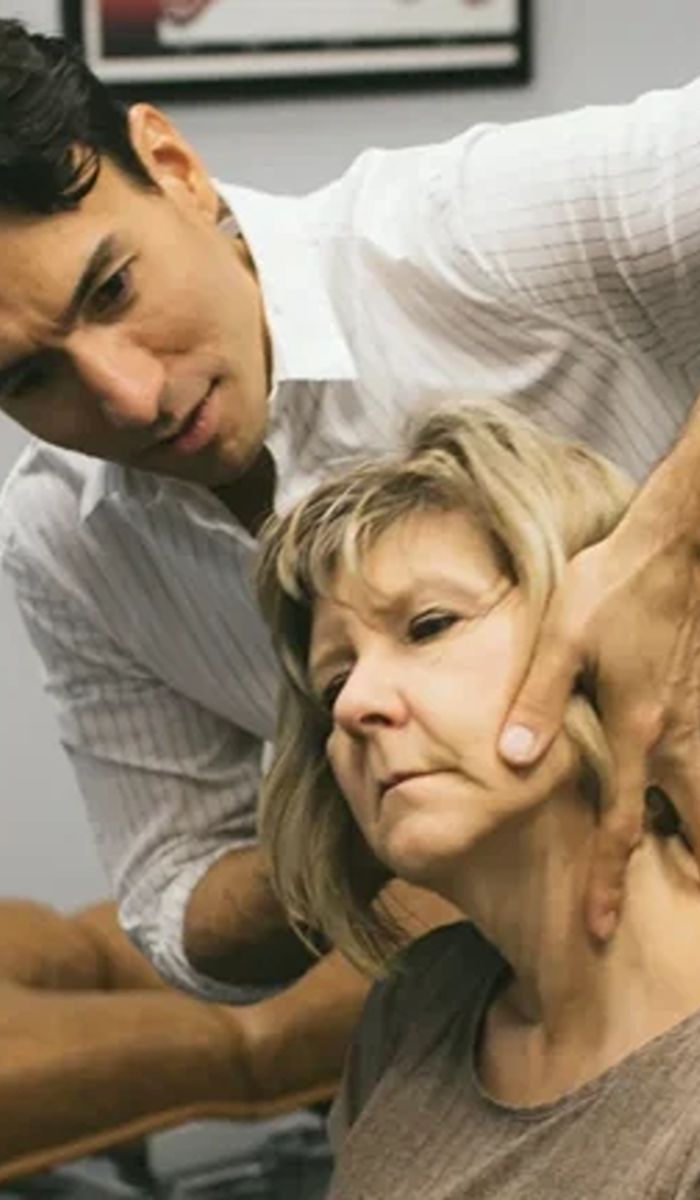
We review when the tinnitus began, how it sounds, which ear is involved, and any changes connected to neck or jaw movement. The examination may include posture, cervical motion, jaw mechanics, muscle tenderness, and neurological findings. Our doctors then explain if a mechanical component appears present. Hearing testing, imaging, dental evaluation, or medical referral may come first when the pattern points beyond chiropractic scope.

Ringing in the ears does not automatically indicate a spinal problem. Our Gonstead-based approach examines the cervical spine only when the history and physical findings make that region clinically relevant.
Depending on the presentation, the examination may include visualization, static palpation, motion palpation, instrumentation, neurological checks, and review of available imaging. Jaw movement and surrounding muscles may also be assessed when the sound changes with clenching, chewing, or opening the mouth.
If an adjustment fits the findings, the contact point and direction are chosen for the restriction identified. Patients do not receive the same cervical adjustment simply because they report tinnitus.
Tinnitus may involve hearing, neurological, vascular, dental, or mechanical factors. Vertical Chiropractic® considers all of the possibilities for any condition treated before deciding whether chiropractic care belongs in the plan.
Chiropractic care cannot promise to eliminate tinnitus. It may have a supporting role when ringing consistently changes with neck position, jaw movement, muscle pressure, or another mechanical factor found during the examination. Tinnitus caused by hearing loss, medication effects, ear disease, infection, or a vascular condition requires different care. The first step is identifying the most likely category rather than assuming an adjustment will change the sound.
Some people notice a change in pitch or volume while turning the head, tightening neck muscles, or applying pressure near the jaw. This may suggest a somatic influence, in which sensory information from the neck or jaw interacts with auditory pathways. It does not prove that the cervical spine caused the tinnitus. Hearing and medical concerns may still need evaluation alongside the musculoskeletal findings.
Jaw clenching, grinding, and TMJ dysfunction may occur with tinnitus because the jaw joint and chewing muscles sit close to the ear and share connected sensory pathways. Signs may include jaw pain, clicking, facial tension, morning headaches, or a sound that changes during clenching. A dentist may need to assess tooth wear or bite concerns, while a chiropractor may examine related jaw and cervical mechanics.
An audiologist or medical provider may be the appropriate starting point, especially when tinnitus is new, persistent, one-sided, or accompanied by hearing changes. Hearing testing may identify loss that is not obvious during daily conversation. A chiropractor may become part of the evaluation when symptoms change with neck or jaw movement or occur alongside relevant mechanical findings. These providers examine different parts of the problem.
A rhythmic whooshing or pulsing that follows the heartbeat is called pulsatile tinnitus. Changes in blood flow near the ear may produce this pattern, although several causes are possible. Pulsatile tinnitus deserves medical evaluation rather than an adjustment-first approach. A healthcare professional may order hearing tests, imaging, or vascular studies based on the history and examination.
Neck tension may influence tinnitus for some people, particularly when the sound changes with posture, muscle contraction, or cervical movement. Stress and poor sleep may also make an existing sound harder to ignore. Muscle tension alone does not explain every case. Persistent ringing still deserves an appropriate hearing and medical assessment, even when neck discomfort is present.
Seek prompt medical care when tinnitus begins with sudden hearing loss, severe dizziness, facial weakness, difficulty speaking, loss of coordination, or another neurological change. Pulsatile tinnitus, significant head trauma, new one-sided symptoms, ear drainage, or a severe headache also deserves timely evaluation. Sudden hearing loss is time-sensitive and should not wait for a routine chiropractic appointment.
Vertical Chiropractic® evaluates possible mechanical contributors to tinnitus at its downtown Sarasota office. Our doctors examine cervical motion, posture, jaw mechanics, muscle findings, and relevant neurological signs. The visit is designed to determine if chiropractic care has an appropriate supporting role and to identify situations where hearing, dental, or medical evaluation should come first.
Recurring or constant tinnitus may affect sleep, focus, work, and conversation. Since ringing may have auditory, neurological, vascular, dental, or musculoskeletal causes, the next step should reflect the pattern rather than a broad assumption.
Vertical Chiropractic® provides a detailed cervical and jaw assessment when a mechanical contribution appears possible. Gonstead analysis is applied selectively, with referral encouraged when the findings point toward another provider.
Call Vertical Chiropractic® in Sarasota at 941-413-5099 or schedule your visit online to have your tinnitus properly evaluated.