
VISIT OUR LOCATIONS:

Your knee carries weight while bending, straightening, turning, and absorbing force. The joint brings together the femur, tibia, and patella, supported by cartilage, menisci, ligaments, tendons, muscles, and fluid-filled bursae. Pain can develop when one or more of these structures becomes irritated, injured, restricted, or overloaded.
Symptoms appear around the kneecap, along either side of the joint, behind the knee, or deep inside it. You might notice an ache after sitting, sharp discomfort on stairs, stiffness after rest, swelling, instability, or difficulty fully bending and straightening your leg.
Daily movements such as standing from a chair, kneeling, walking, and getting into a car might become harder. Running, golf, pickleball, strength training, and other activities can also expose changes in balance or joint mechanics.
Knee pain has many possible sources, including tendon irritation, cartilage changes, meniscus problems, ligament injuries, arthritis, and movement changes involving the hip, foot, ankle, or lower back. Identifying the involved structure and contributing mechanics provides a more useful starting point than treating every painful knee the same way.
THE MOVEMENT THAT HURTS OFFERS AN IMPORTANT CLUE
Knee symptoms often change with position and activity. The location, timing, and type of discomfort may provide useful information about the structures involved.
Some people remain comfortable while walking on level ground but feel pain during squats, lunges, running, or rising from a low seat. Others notice the knee giving way unexpectedly or becoming difficult to straighten.
A detailed examination places these experiences into context for proper knee pain chiropractic care rather than treating one symptom as a diagnosis.
LOAD, ALIGNMENT, AND PAST INJURIES ALL MATTER
A knee may become painful after an obvious twist or fall, but symptoms also develop gradually. Training changes, repeated impact, limited hip or ankle motion, and previous injuries may alter how force moves through the leg.
Foot position, lower-leg rotation, and pelvic mechanics may influence the direction of stress at the knee. Since overuse, traumatic injury, arthritis, and movement dysfunction require different responses, the examination with our chiropractor for knee pain in Sarasota, Florida, must identify what is contributing before care begins.
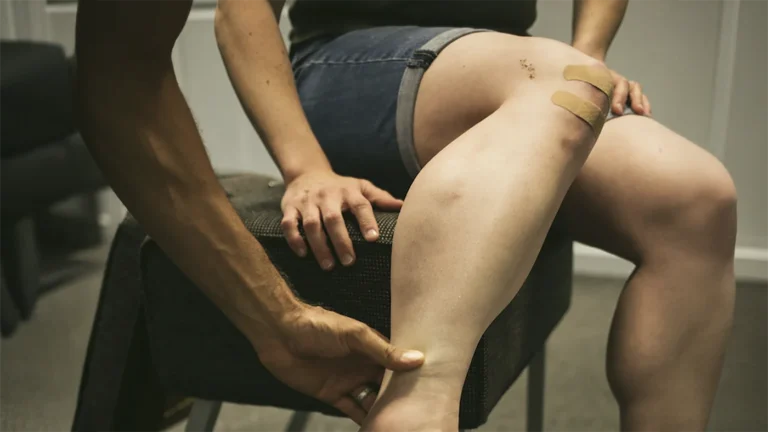
A chiropractor for knee pain examines more than the point of discomfort. Chiropractic adjustments may be appropriate when restricted joint movement, altered kneecap mechanics, lower-leg rotation, or compensation from another region contributes to the symptoms.
The knee sits between the hip and foot. Limited hip rotation may change how the thigh moves over the knee, while restricted ankle motion may alter squatting, walking, or running mechanics. Pelvic and lower-back findings may also matter when pain travels through the leg or appears with neurological symptoms.
When supported by the examination, care may include specific adjustments to involved extremity or spinal joints. The purpose is to improve the movement available through the chain rather than force a painful knee through motion. Activity guidance may also reduce repeated irritation while function improves.
Condition-relevant aims may include:
We begin by reviewing how symptoms developed, previous injuries or surgery, swelling, instability, activity changes, and movements that aggravate the knee. The examination may compare gait, standing alignment, knee motion, joint tenderness, kneecap movement, strength, and orthopedic findings.
Because the knee functions between the hip and foot, those regions may also be assessed. Lower-back or neurological screening becomes relevant when symptoms travel through the leg or include weakness, numbness, or tingling.
Imaging or orthopedic evaluation may be appropriate after trauma, persistent locking, significant instability, or suspected ligament, meniscus, cartilage, or bone injury. Prompt medical care is important for visible deformity, inability to bear weight, rapid swelling after injury, a hot red joint with fever, or calf swelling accompanied by warmth or tenderness.
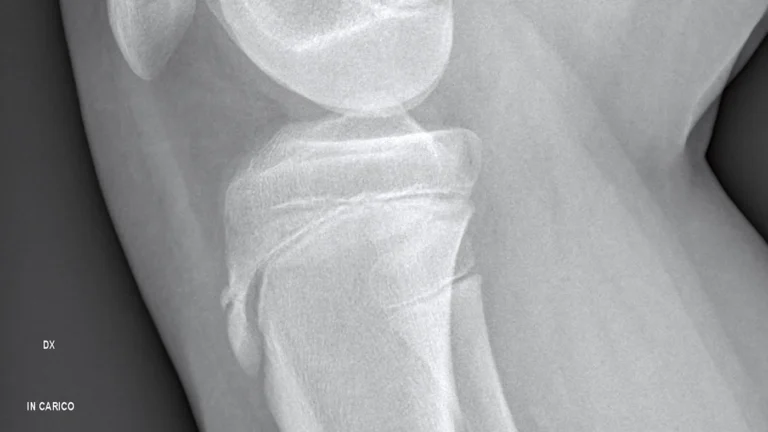
Your first appointment focuses on why the knee hurts and which movements or structures appear involved. We review symptom history, previous injuries, activity demands, swelling, instability, and aggravating positions. Your chiropractor may assess gait, knee motion, kneecap mechanics, strength, tenderness, and selected orthopedic findings. Hip, ankle, foot, pelvic, and spinal function may also be examined when relevant.
Gonstead extremity analysis guides the assessment, while available imaging is reviewed when useful. Afterward, we explain the findings, discuss where chiropractic care may fit, and identify when imaging, medical care, or an orthopedic referral deserves priority before any adjustment is considered.

Knee movement depends on the relationship between the femur, tibia, patella, hip, ankle, and foot. Our Gonstead chiropractors consider those connections instead of focusing on the painful joint in isolation.
Visualization may reveal stance, gait, or postural differences. Static and motion palpation assess tissue changes and joint movement, while instrumentation applies to spinal analysis when a neurological contribution is suspected. Imaging may add context when clinically indicated.
Extremity analysis examines the motion and position of relevant joints through the leg. If an adjustment is suitable, the contact, patient position, and direction follow the examination findings. No single knee adjustment is applied to every patient or every diagnosis.
Knee complaints require careful distinction between joint dysfunction, training stress, degenerative changes, and injuries requiring medical care. Vertical Chiropractic® brings focused extremity education and Gonstead analysis together at our downtown Sarasota office.
These movements increase demand around the kneecap as the quadriceps controls bending and straightening. Pain may relate to patellofemoral irritation, tendon stress, cartilage changes, or altered tracking. Hip strength, ankle mobility, and lower-leg rotation may also influence how the knee moves. An examination compares these factors instead of assuming every case is runner’s knee. Patellofemoral pain commonly appears around the kneecap during activities that load a bent knee.
Clicking without pain, swelling, locking, or instability does not always indicate damage. Tendons may shift, gas may move within joint fluid, or the kneecap may create sound during movement. Clicking accompanied by pain, catching, swelling, reduced motion, or a sense that the knee gives way deserves closer evaluation for meniscus, cartilage, kneecap, or joint-related problems.
Yes, mechanics above and below the knee may alter how force travels through the joint. Restricted ankle motion may change a squat or walking pattern. Limited hip control may allow the thigh and knee to move differently during stairs, running, or single-leg activity. The knee still requires its own examination, but ignoring connected regions may leave an important contributor unexplored.
Activity choices should reflect the symptom pattern and suspected cause. Mild discomfort from a recent training increase may settle after temporarily reducing impact, depth, resistance, or volume. Sharp pain, instability, locking, significant swelling, or worsening symptoms are reasons to stop the provoking activity and seek an evaluation. Exercise guidance differs for tendon irritation, arthritis, meniscus problems, and acute ligament injuries.
Imaging is more likely to be discussed after significant trauma, inability to bear weight, recurrent swelling, locking, instability, or findings suggesting bone, cartilage, ligament, or meniscus injury. X-rays show bones, joint spacing, alignment, and degenerative changes. MRI provides greater detail for many soft-tissue structures. The examination and injury history guide which study, if any, makes sense.
Chiropractic treatment does not reverse cartilage loss or cure arthritis. It may play a supportive role when restricted motion or related hip, ankle, foot, or spinal mechanics add to the difficulty of moving comfortably. Arthritis commonly causes pain, swelling, and stiffness in weight-bearing joints such as the knee. Exercise, rehabilitation, and orthopedic care may remain important parts of a broader plan.
Seek prompt medical care after visible deformity, inability to bear weight, rapid swelling, or a knee that remains locked. Redness, warmth, and fever may signal infection. Calf swelling, warmth, or tenderness also deserves urgent attention because the symptoms may involve circulation rather than the knee joint itself. Sudden instability following a pivot or landing may require orthopedic assessment for ligament injury.
Vertical Chiropractic® evaluates knee complaints at its downtown Sarasota office. Our doctors examine the painful joint alongside relevant gait, hip, ankle, foot, pelvic, and spinal findings. This approach is suited to people whose symptoms interfere with walking, stairs, golf, running, pickleball, tennis, strength training, work, or ordinary movement.
Persistent knee pain may limit walking, stairs, exercise, work, and time on your feet. Our downtown Sarasota chiropractors examine the knee and related movement chain before discussing individualized options. Gonstead extremity training guides the evaluation, while responsible referrals remain part of the process when another form of care is more appropriate.
Call Vertical Chiropractic® in Sarasota at 941-413-5099 or schedule your visit online to have your knee pain properly evaluated.